How Far Do HITWAY E-Bikes Really Go? Battery Range Explained Simply
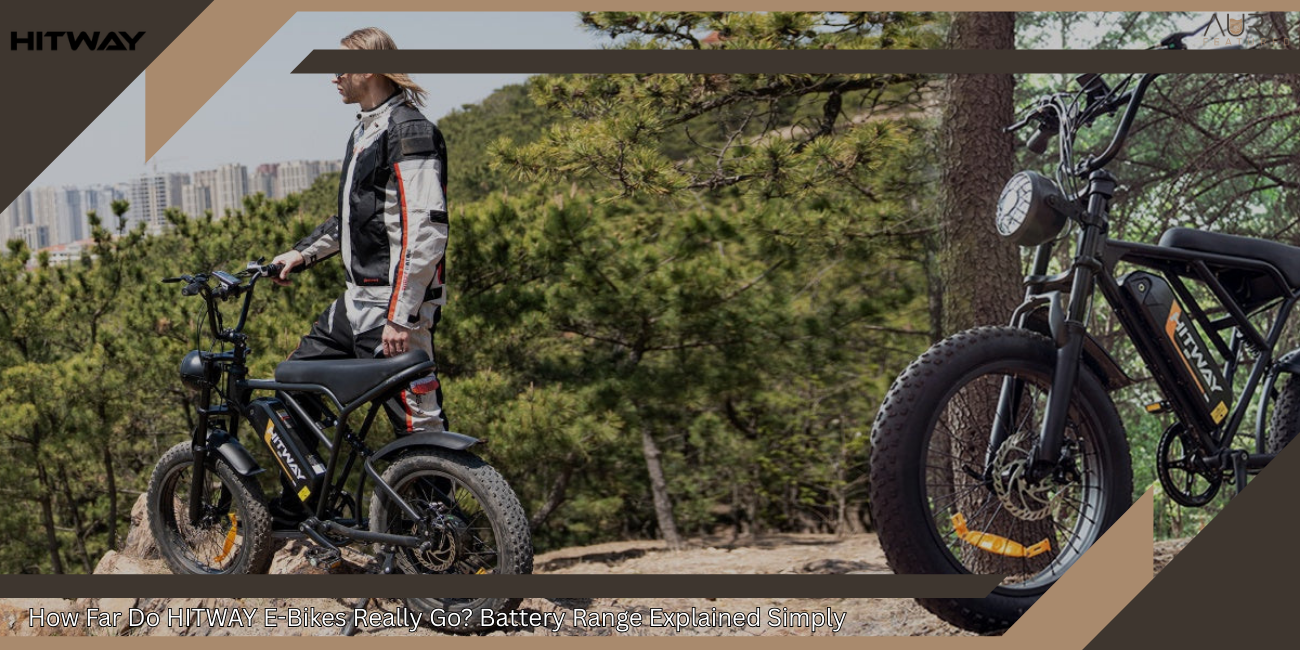
You’ve heard that electric bikes can take you farther with less effort but how far do they actually go in real life? Range depends on many factors, including battery size, terrain, rider weight, and assist level. In this guide, we break down how far HITWAY e-bikes really go, what affects range, and how to get the most out of your battery so you ride farther with confidence.
TABLE OF CONTENTS
INTRODUCTION
Electric bike range is one of the most important things riders want to know before buying. While manufacturers often give top-end estimates, real-world use can be quite different.
At its core, range is about how far your e-bike can travel on a single battery charge and that depends on many variables. HITWAY e-bikes are known for good battery capacity and efficient motors, but to make smart decisions, you need to understand how range works in real life.
In this guide, we’ll break down range in simple terms and show you what you can realistically expect from popular HITWAY e-bike models.
WHAT “RANGE” REALLY MEANS FOR E-BIKES
When an e-bike manufacturer lists a range number, it’s usually based on ideal conditions:
✔ Flat terrain
✔ Steady moderate speed
✔ Light rider
✔ Minimal stops and starts
But real rides rarely happen in this perfect world. So your actual range might be… shorter or a little longer depending on how you ride.
HOW E-BIKE BATTERIES WORK
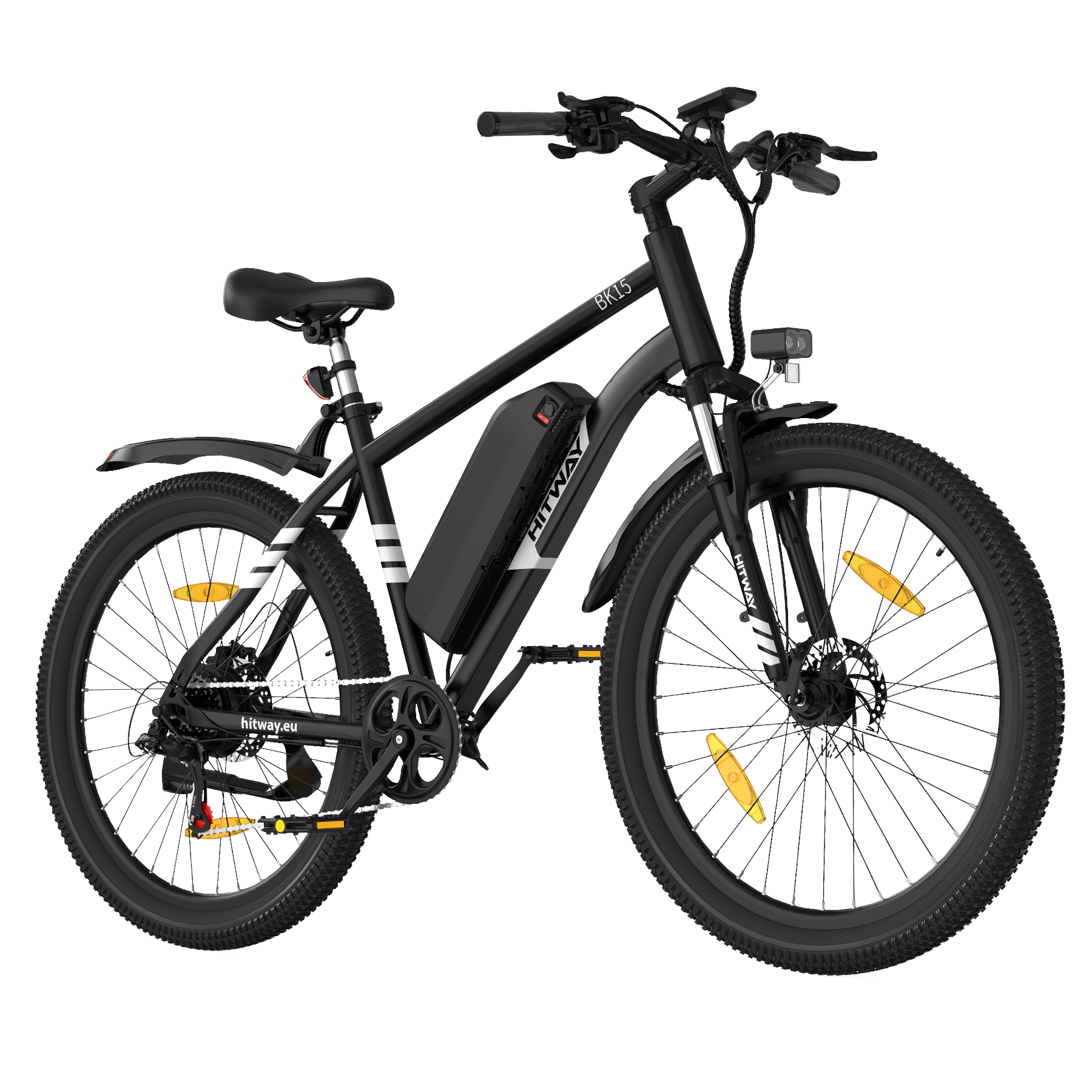
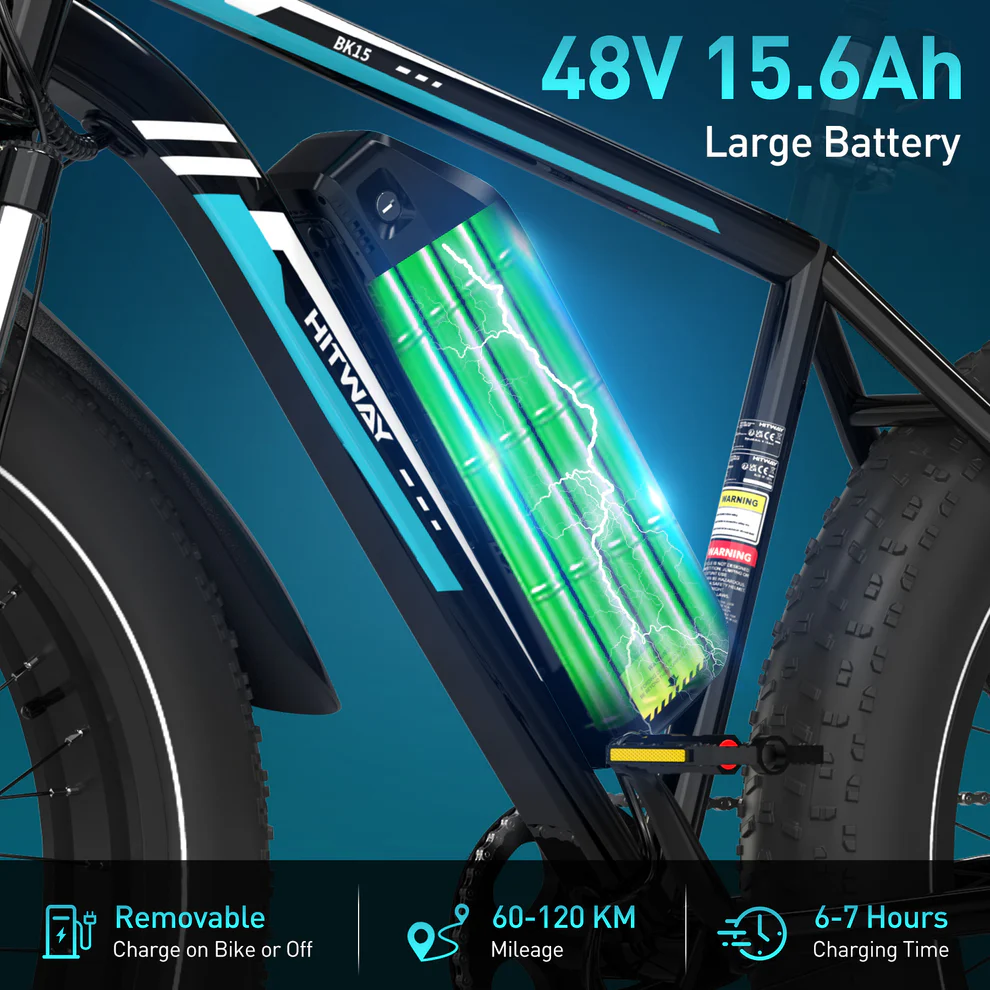
Most electric bikes, including HITWAY models, use a lithium-ion battery measured in watt-hours (Wh), which tells you how much energy it can store.
-
Higher Wh = more stored energy
-
More energy = longer potential range
For example:
-
A 500 Wh battery might get 25–45 miles
-
A 700 Wh battery could reach 40–70 miles
-
Bigger batteries = heavier weight but longer rides
HITWAY uses mid- to high-capacity batteries on many models, balancing range and weight.
KEY FACTORS THAT AFFECT RANGE
1. Rider Weight
Heavier riders use more energy just like a car needs more fuel with a heavy load.
2. Terrain
Flat roads use less battery than hills or uneven trails.
3. Assist Level
Higher assist = more power use = shorter range.
4. Speed
Faster riding drains battery quicker.
5. Wind & Weather
Wind resistance and cold temperatures reduce range.
6. Tire Type
Fat tires add weight and rolling resistance which can cut range compared to narrower city tires.
RANGE EXPECTATIONS FOR HITWAY MODELS
Here’s a simple look at practical range numbers based on common HITWAY e-bike categories:
*(Click on Bike Model For More Information )
These numbers assume mixed riding city streets plus occasional hills at moderate speeds and assist settings.
REAL-WORLD SCENARIOS: CITY VS TRAIL
Urban Commute
If your route is mostly flat and you use moderate assist, you can expect the higher end of the range closer to:
✔ 40–45 miles for folding e-bikes
✔ 60–70 miles for larger battery bikes
Mixed Trails
When you include hills or gravel:
✔ Range may drop 10–20%
✔ Still enough for long weekend rides
Continuous Hilly Rides
Steep hills use more battery, so adjust expectations:
✔ Folding models might average ~25–35 miles
✔ Fat tire and mountain e-bikes can still manage ~40–60 miles based on assist used
HOW TO MAXIMIZE YOUR RANGE
Want to get the most out of your battery? Here are practical strategies:
Use Lower Assist Levels When Possible
You still get help but use less battery.
Ride at Consistent Speeds
Stop-and-go is more demanding than steady cruising.
Keep Tires Properly Inflated
Well-inflated tires roll more efficiently.
Reduce Extra Weight
Lighter loads = longer range.
Plan Routes in Advance
Avoid excessive hills if range is a priority.
SEASONAL & WEATHER EFFECTS ON RANGE
Weather matters more than you might think:
Cold Weather
Battery efficiency drops in cold conditions just like phones and laptops.
Hot Weather
Heat doesn’t drain range as fast, but can affect battery health over time.
Wind
Headwinds use more power. Tailwinds help.
Adjust your expectations and planning based on conditions.
RANGE TIPS FOR DAILY COMMUTERS
If you’re riding daily:
✔ Keep battery topped up overnight
✔ Ride lower assist if traffic is slow
✔ Shift to eco modes for flatter segments
✔ Use city tires for less rolling resistance
A daily commuter route often sits anywhere from 10–30 miles round trip, so even mid-capacity e-bikes often handle it comfortably.
COMMON RANGE MYTHS SIMPLIFIED
Here are some quick truths:
❌ “All fat tire bikes have short range”
✔ Not true bigger batteries make up for tire weight.
❌ “Lowest assist always gives the longest range”
✔ Yes, but slower speeds and long rides use more overall power.
❌ “Bigger motor means shorter range”
✔ Only if you use higher assist all the time. Motor size alone doesn’t kill range.
FINAL THOUGHTS
Understanding e-bike range doesn’t require technical expertise it just requires realistic expectations. For most riders, HITWAY e-bikes deliver reliable, real-world performance that’s more than enough for daily commuting and weekend adventures.
Here’s a quick rule of thumb:
-
Folding city e-bikes: Great for everyday rides up to ~45 miles
-
Fat tire adventure bikes: Strong extra range and better off-road stability
-
Mountain e-bikes: Longest range and best hill support
With the right model and riding style, you’ll enjoy confident, extended rides and understand exactly how far your HITWAY bike really goes.